Características del producto
Simula pruebas de rendimiento de vehículos en puentes, tales como la aceleración al arrancar, el rendimiento del par motor, la velocidad máxima, el rendimiento en marcha por inercia y el rendimiento de la fuerza de frenado.
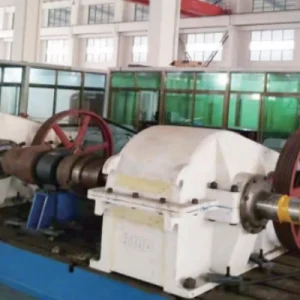
Estructura y principio de funcionamiento del sistema de ensayo del comportamiento de vehículos y puentes
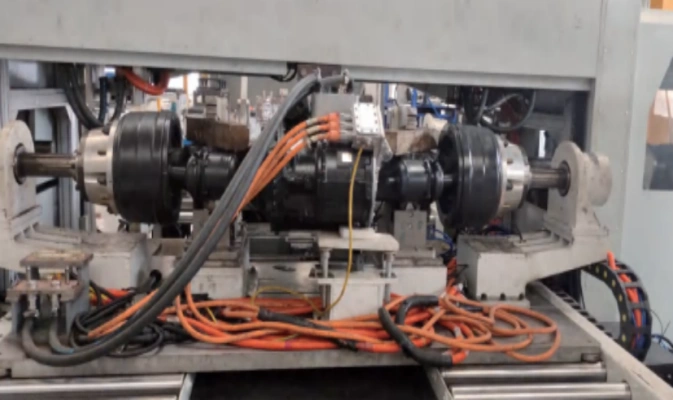
El extremo de entrada del puente del vehículo está accionado por un motor asíncrono trifásico en lugar de un motor de combustión, y el par, la velocidad y la potencia en el extremo de entrada se detectan mediante sensores.
Se conecta un volante de inercia al extremo de salida del puente del vehículo para simular la inercia equilibrada una vez instalado el puente en el vehículo, y actúa como elemento de almacenamiento de energía para las pruebas de detección de frenos.
En los extremos de salida a ambos lados del puente del vehículo se han instalado dispositivos de carga de simulación, que pueden aplicar carga de forma independiente en ambos lados para simular el par de resistencia a la rodadura entre las ruedas y el suelo; además, dicho par de resistencia se puede ajustar y controlar de forma continua.
El par de resistencia dinámica real se detecta mediante sensores. A través de estos procesos, se pueden determinar la eficiencia de la transmisión, el par de resistencia interna, las características de frenado y las características del diferencial del eje del vehículo, entre otros parámetros.
Detección automática y análisis de datos
Mide el ruido de funcionamiento y los sonidos anómalos del puente del vehículo mediante sensores de ruido y vibraciones.
Mide de forma indirecta el aumento de temperatura del aceite en el reductor principal del puente del vehículo mediante sensores de temperatura.
Detecta el estado de tensión del puente del vehículo mediante sensores de presión.
El sistema de medición y control controla automáticamente el motor, el cargador, el sensor, etc., durante la prueba; simula automáticamente diversas condiciones de funcionamiento del puente del vehículo, tales como rotación hacia delante y hacia atrás, aumento y disminución de la velocidad, funcionamiento estable a diferentes velocidades, pares de resistencia diferentes en ambos lados, frenado, etc., y recoge diversas señales de los sensores para su análisis y cálculo por parte del ordenador, proporcionando datos de ensayo, curvas y conclusiones.
Ofrece conclusiones de ensayo con o sin salvedades, con referencia a las normas.
Capítulo sobre productos: equipos de ensayo eléctricos

 ES
ES  EN
EN  RU
RU  PT
PT